
CASE STUDY · SOCIAL APP · 2016 ORIGINAL, 2026 REVISIT
SnikOut: from a shared interest to a plan both people chose
SnikOut was a 2016 app for finding people to do things with. In 2026 I went back to its hardest step: getting from "we matched" to "we're meeting", safely.
6 MIN READ
At a glance
- My role
- Sole designer on the founding team in 2016. Designer and writer of the 2026 revisit.
- When
- 2016 original · 2026 revisit
- What I did
- Rethought the path from finding someone to meeting them: discover, invite, respond, and stay safe along the way.
- Shown on
- The original 2016 screens, and 2026 concept screens with sample people.
- Next
- Test the invitation, the reply and the moment after with real people.
01 · THE PROBLEM
Finding people was easy. Making a plan with them wasn't.
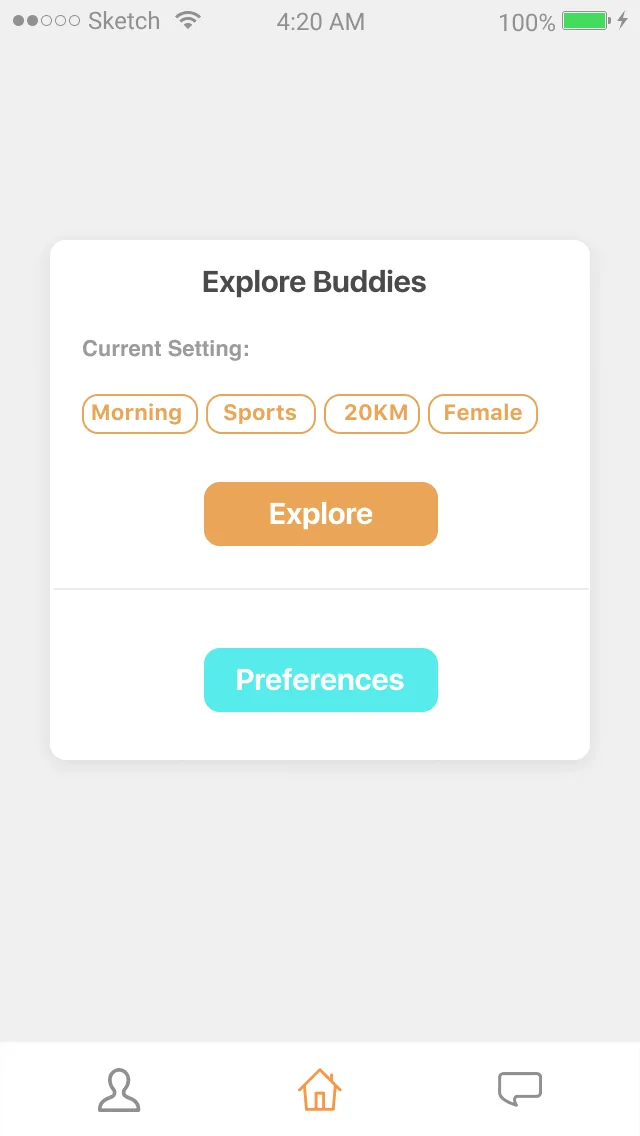
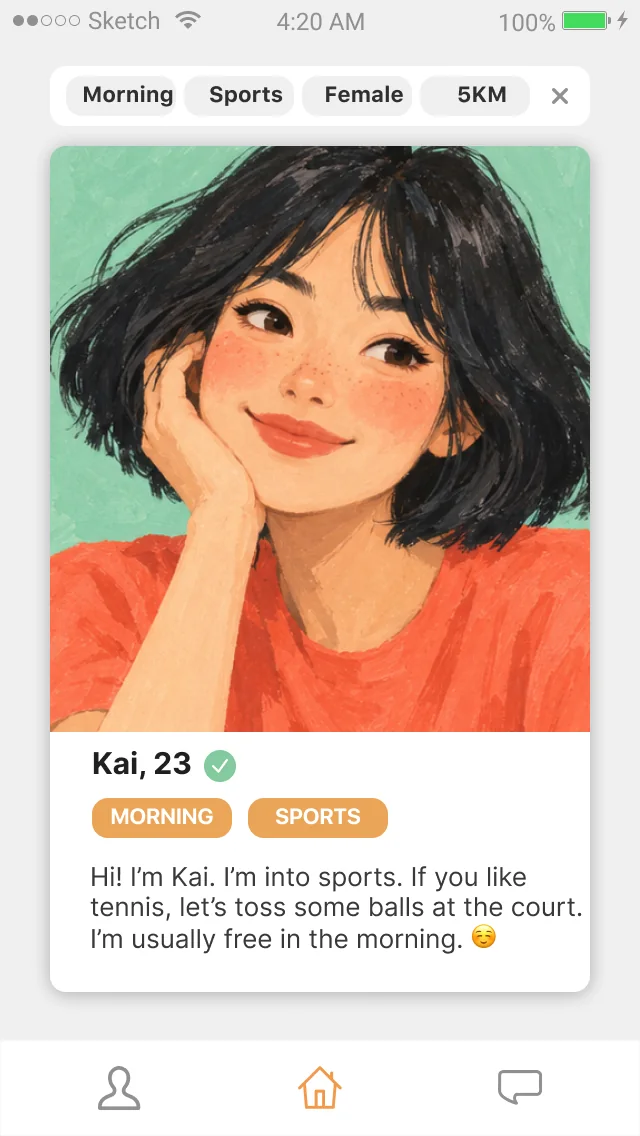
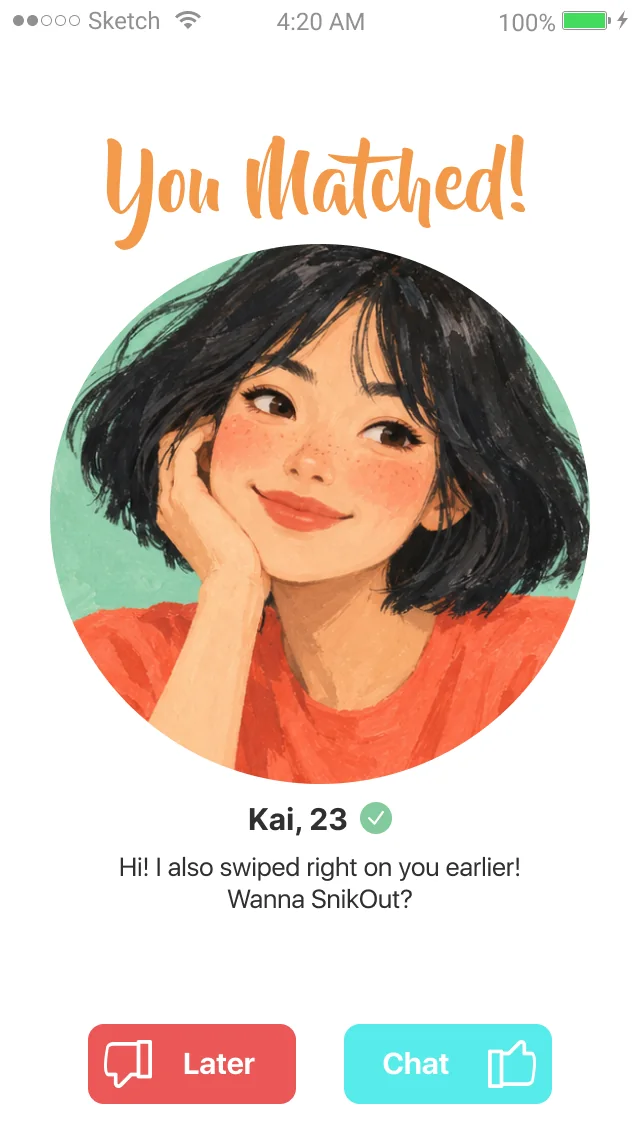
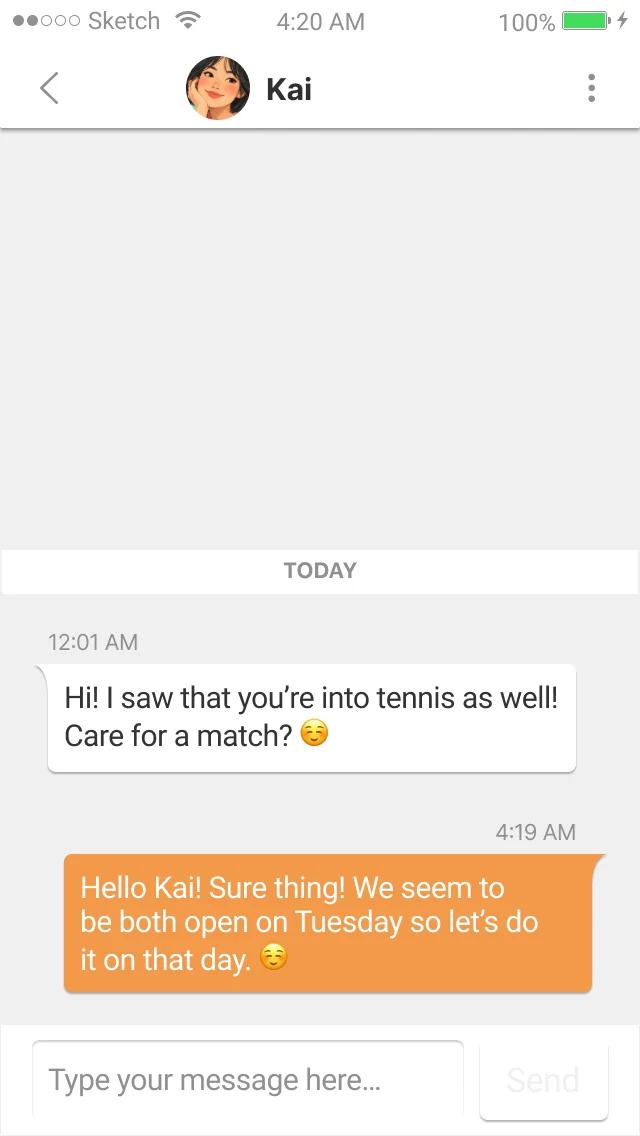
In 2016, SnikOut helped people find others who liked the same things. Group chats handled the talking. But the step from a match to a real meetup was left to chance: who's going, when, where, and whether it's still on.
02 · WHY IT MATTERS
Loneliness is common, so a plan that actually happens is worth designing for.
The WHO's 2025 report puts social connection on the public-health agenda. My proposal is small on purpose: clearer, safer invitations. It isn't a claim to solve loneliness.
1 in 6






People worldwide affected by loneliness.
Global context, not a SnikOut user measure.
1 in 6
People worldwide affected by loneliness.
Global context, not a SnikOut user measure.
03 · WHAT I LOOKED AT
Good booking tools start from when, ask for the basics, and let a yes change.
I looked at six apps that turn an intention into a plan. Airbnb starts from Today, Tomorrow or This weekend. OpenTable and Swiggy ask for party size and a real time slot before anything else. Meetup keeps "Edit attendance" in reach and lets a host give a plan its shape. DoorDash names the pending moment. Each idea carried into SnikOut.

04 · DISCOVER
Start from the time you have, not a feed of strangers.
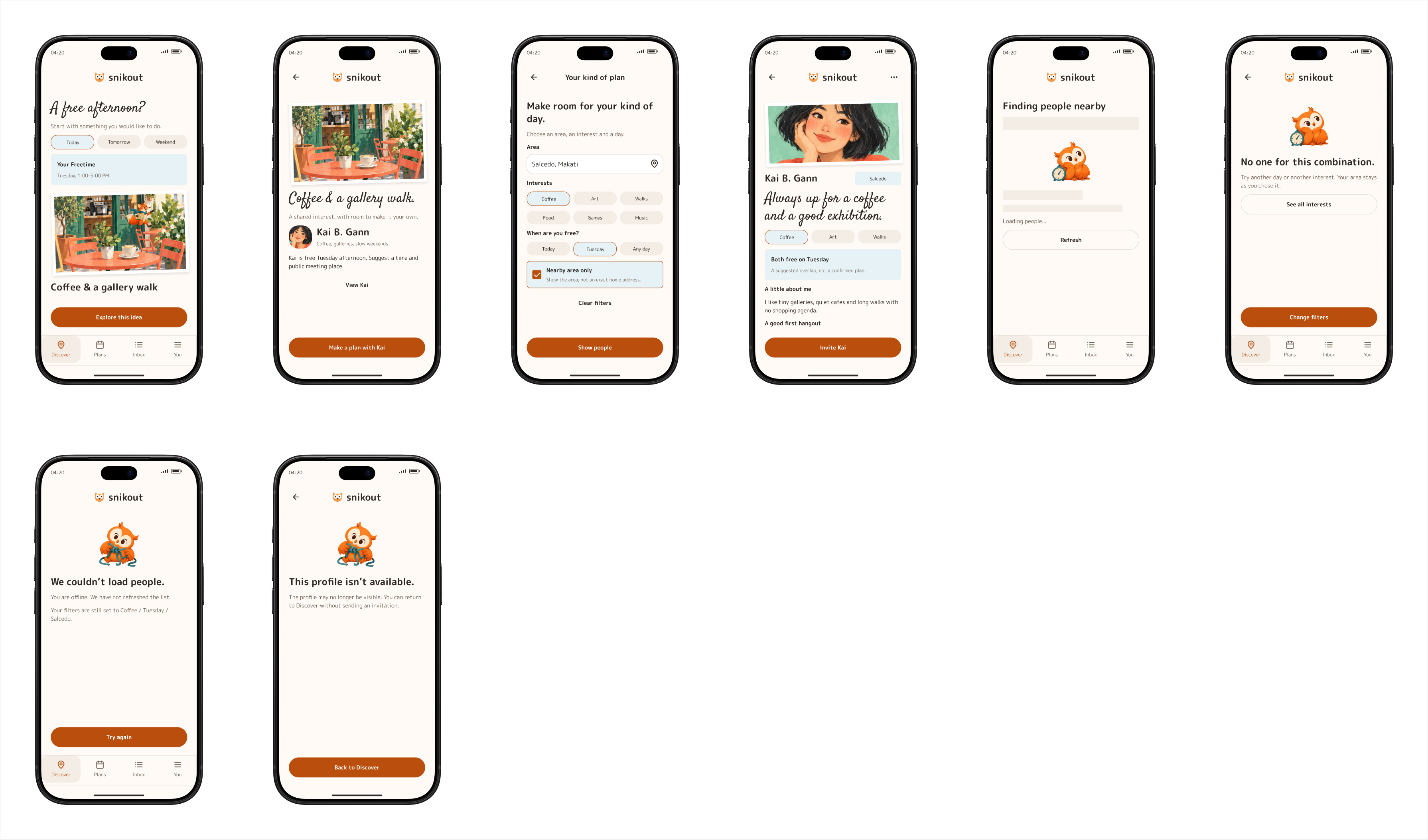
Discover opens on your free slot and the ideas that fit it. Every idea shows the when and where up front, and a profile is one tap away before you say anything. Loading, empty and offline each get their own screen, so the feed never just goes blank.
05 · RESPOND TO AN INVITATION
Every invitation is easy to answer, and every answer is respected.
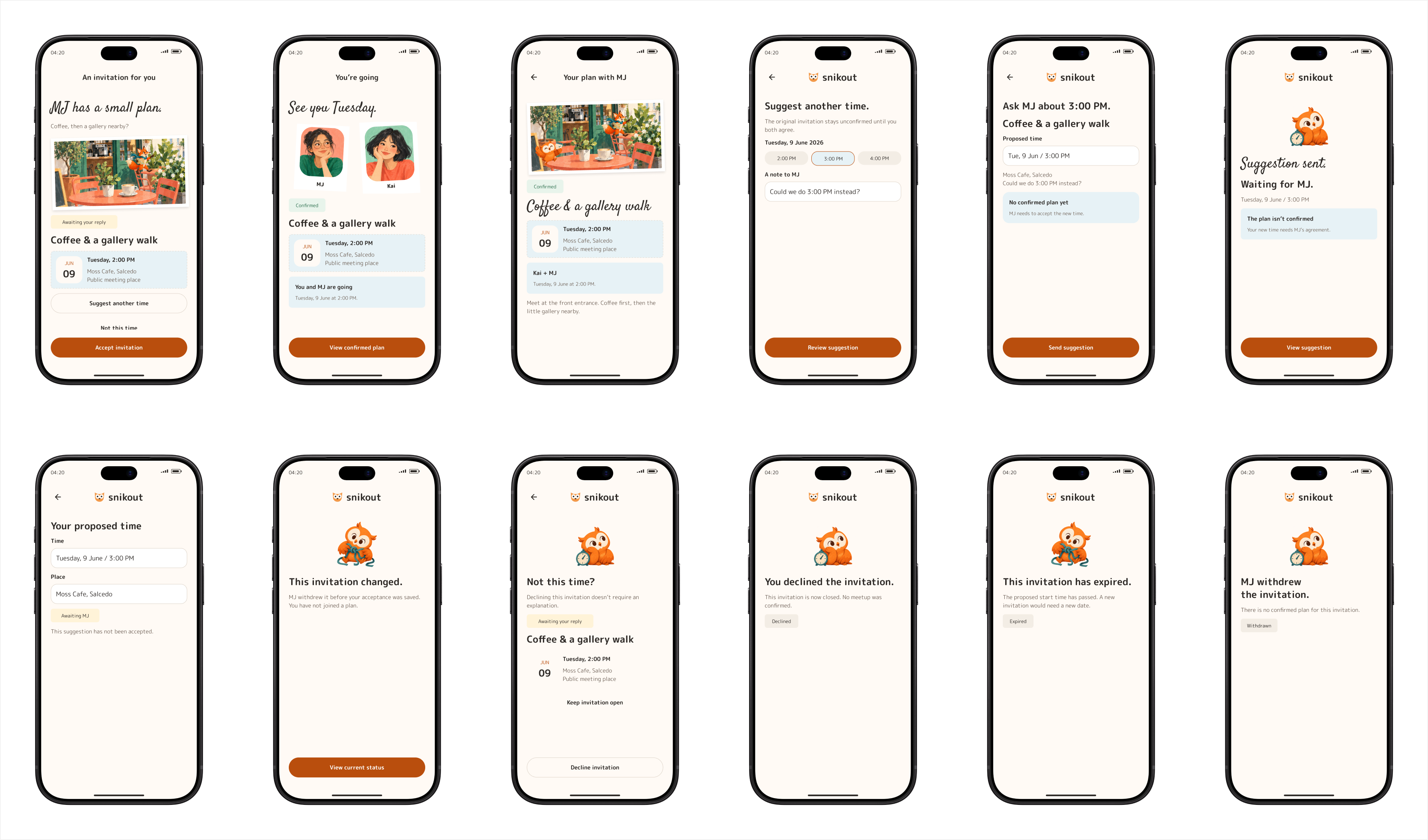
Accept, suggest another time, or decline. Each choice says what happens next. A counter-proposal shows exactly what changed before it's sent. Declined, expired and withdrawn invitations each say so plainly, so nobody waits on a plan that's gone.
06 · SAFETY
Safety lives inside the flow, not in a settings page.
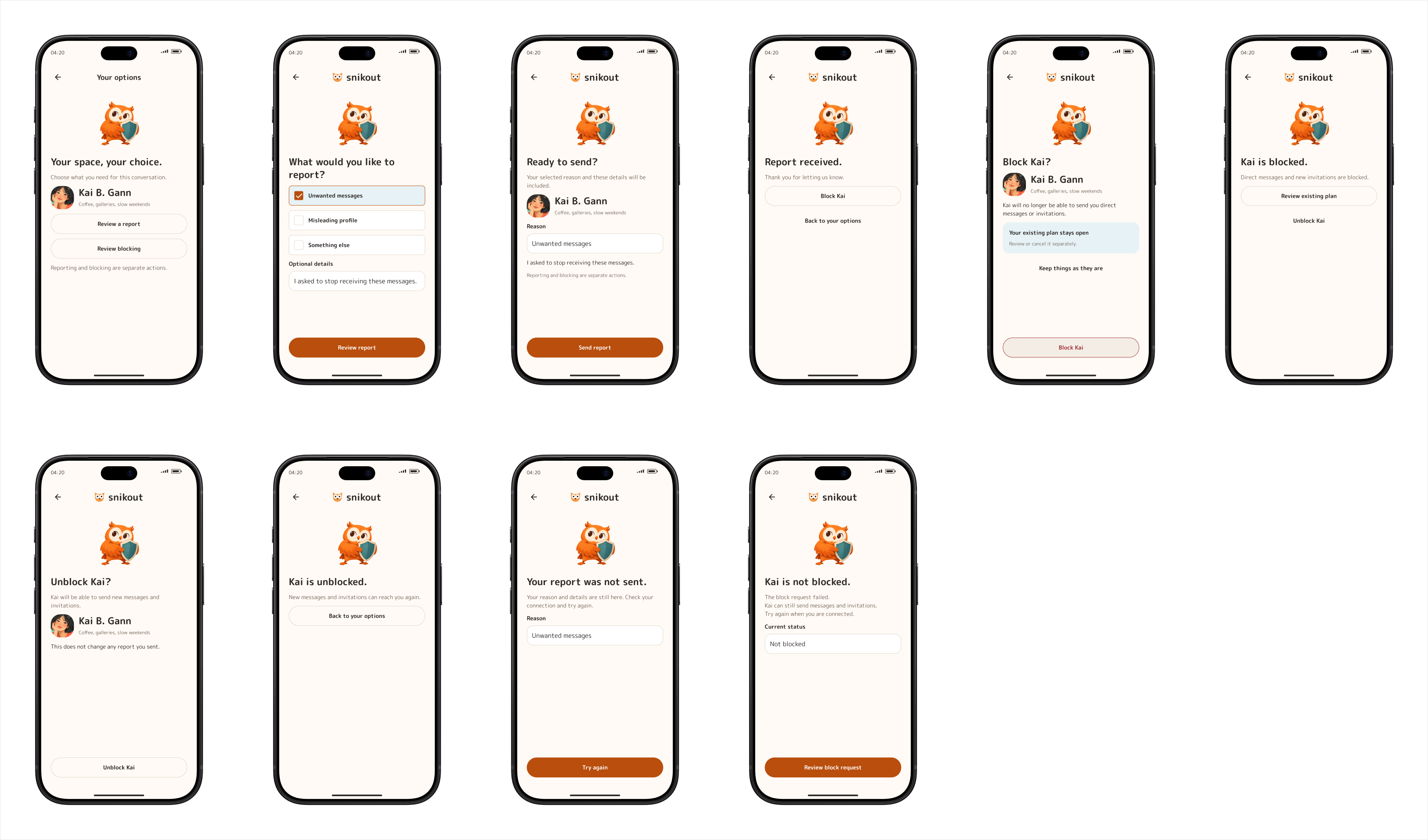
Meeting someone new carries real risk, so the safeguards sit where people need them. You can report someone, block them, or both, from the same place. Reporting and blocking are separate, so neither happens by accident. Blocking someone doesn't silently cancel a plan you still need to deal with. If a report or a block fails to send, the app says so and keeps what you wrote.
07 · THE DESIGN
From a free afternoon to a confirmed plan.
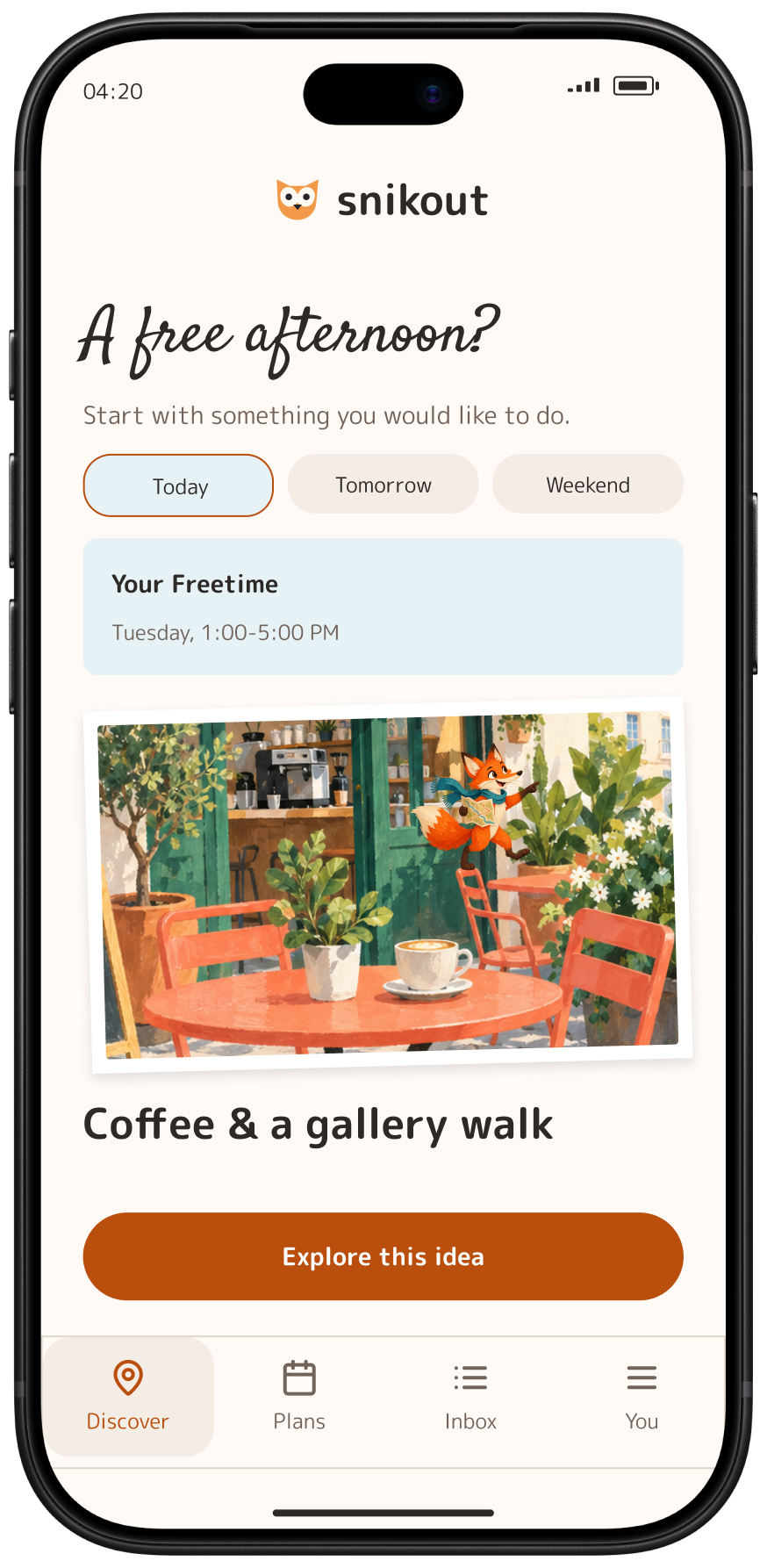
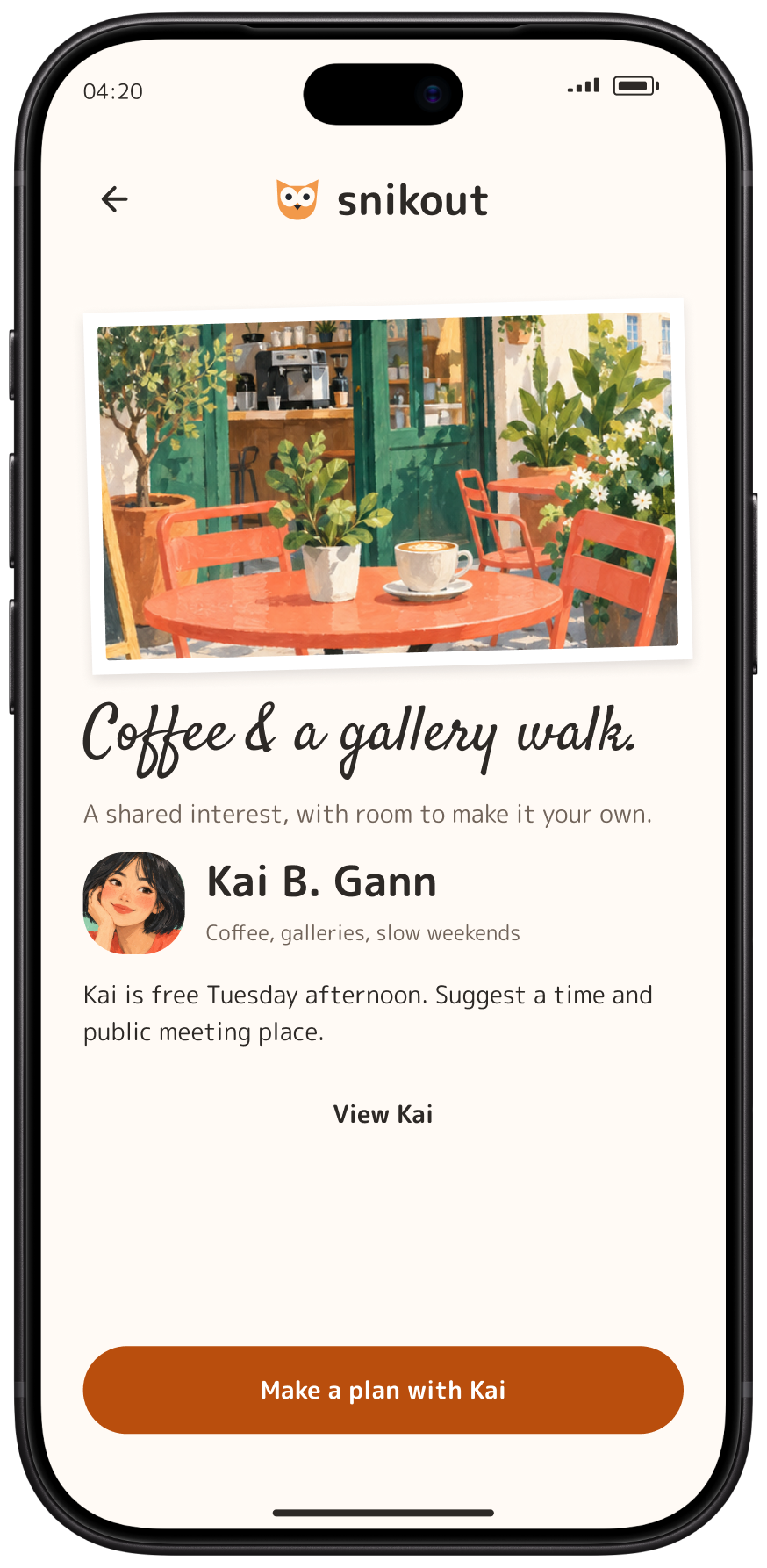
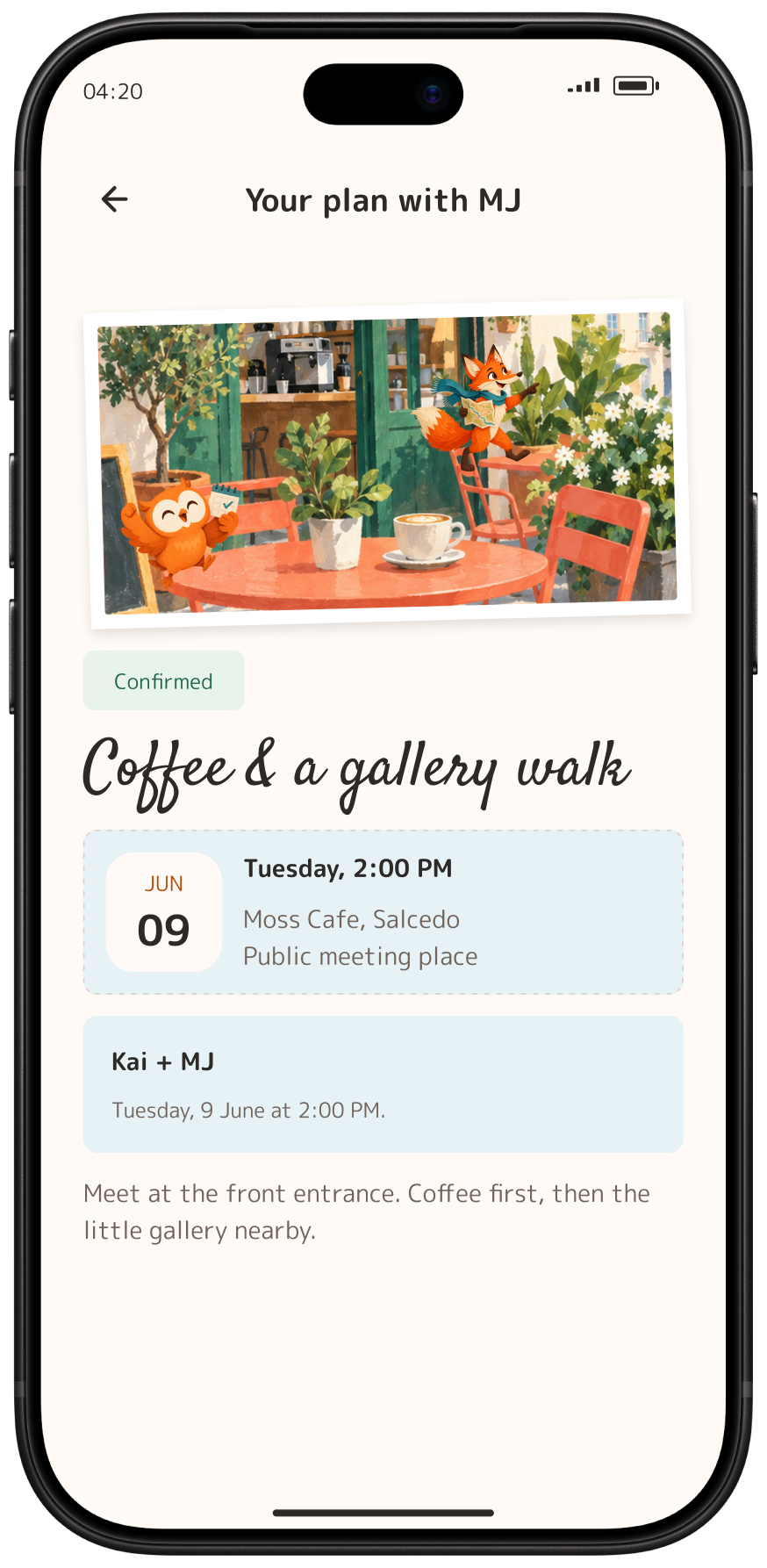
The 2026 screens follow one plan: a free slot, Kai's idea for coffee and a gallery walk, then a confirmed plan with the time, the place and who's going. Nobody has to guess whether it's on.
08 · WHAT I'D DO NEXT
Next, I'd test the invitation and the moment after.
None of this is tested yet. I'd watch real people send, answer and change plans. I'd also give the moment a plan falls through the same care as the invite: say plainly what changed, then make it easy to pick a new time or step away.